Learn about the Penny Pledge - our $0.01/kg promise to fund the ‘That’s Clean’ campaign.

Stakeholder GuidesFor Technology Providers

The Role of Electrolyzer PEM Efficiency in Project Bankability
In the race to $2/kg hydrogen, stack efficiency isn’t just a technical spec—it’s the primary determinant of debt capacity and long-term asset value.
As the global hydrogen economy transitions from pilot projects to utility-scale deployments, technology providers face a new paradigm. Performance guarantees and degradation curves are no longer just engineering challenges; they are the bedrock of project financing. For Proton Exchange Membrane (PEM) electrolyzer manufacturers, the path to market leadership lies in bridging the gap between laboratory efficiency and bankable field performance.
Context: The Efficiency-Capital Nexus
The hydrogen sector is rapidly shifting from ‘cost-plus’ to ‘value-driven’ procurement. For technology providers, this means the technical performance of an electrolyzer stack is directly linked to the project’s ability to secure low-cost capital. Lenders and equity partners look beyond the initial CAPEX, focusing instead on the reliability of the hydrogen output over a 10-to-20-year horizon. Efficiency, in this context, is the engine of revenue.
Landscape: PEM Dominance and the Efficiency Gap
Currently, PEM technology is favored for its rapid response times and compatibility with intermittent renewable energy sources like wind and solar. However, the industry is witnessing a widening gap between ‘headline’ efficiency and ‘operational’ efficiency. Technology providers who can demonstrate consistent performance under fluctuating loads are gaining a competitive edge. The landscape is moving toward standardized testing protocols that allow investors to compare stack longevity and degradation rates across different OEMs.
Economics: Sensitivity Analysis of LCOH
Levelized Cost of Hydrogen (LCOH) is highly sensitive to the efficiency of the electrolysis process. A 1% improvement in stack efficiency can lead to a significant reduction in the total electricity required, which often accounts for 60-80% of the LCOH. For a 100MW project, this small percentage gain can translate into millions of dollars in NPV (Net Present Value) improvements. Understanding this economic sensitivity allows technology providers to position their equipment as a value-add rather than a commodity.
Action: Engineering for Durability and Predictability
To achieve bankability, technology providers must focus on two critical areas: degradation predictability and balance-of-plant (BoP) integration. Investors require data-backed assurance that the stack will not lose more than a predetermined percentage of efficiency per 1,000 hours of operation. Providing robust O&M (Operations & Maintenance) packages and performance guarantees is no longer optional; it is the price of entry for utility-scale contracts.
Roadmap: Scaling from MW to GW
The roadmap for technology providers involves the industrialization of stack manufacturing. Transitioning from manual assembly to automated, high-throughput production lines is essential to reduce costs while maintaining the high tolerances required for PEM efficiency. As the industry scales toward gigawatt-level projects, the winners will be those who can provide modular, scalable designs that minimize installation complexity and maximize uptime through advanced diagnostic monitoring.
Expert Recommendation
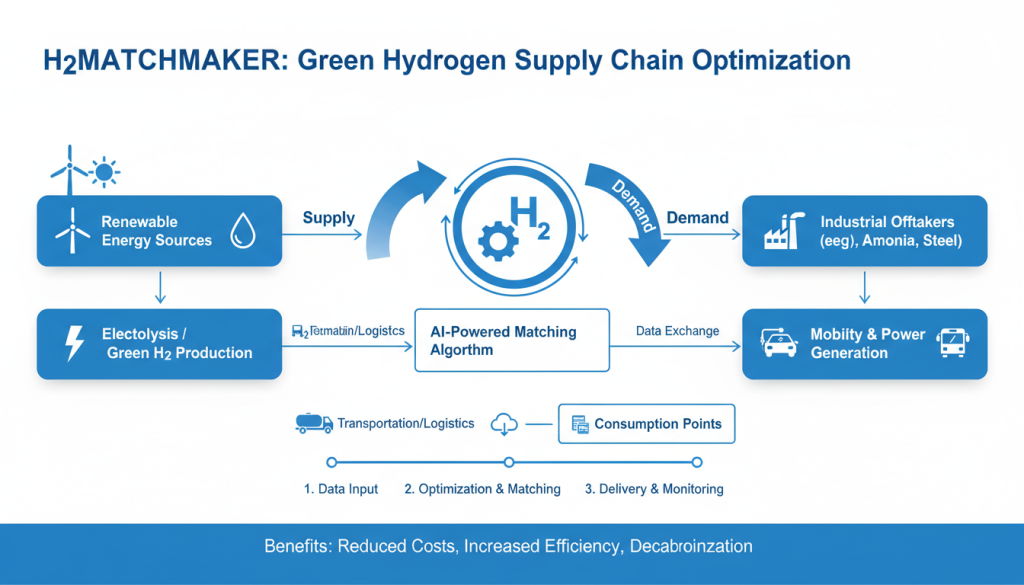
Position your technology at the center of the hydrogen transition. Join H2Matchmaker to connect with developers and financiers looking for bankable, high-efficiency electrolysis solutions. Visit H2Matchmaker.com