Learn about the Penny Pledge - our $0.01/kg promise to fund the ‘That’s Clean’ campaign.

The Network Fallacy: You Don’t Need a Map, You Need a Line

Stop waiting for a nationwide network of hydrogen stations. You will go bankrupt before it exists.
I hear the same excuse in every boardroom. “We can’t transition to hydrogen because the infrastructure isn’t there.” It is a lazy argument.
It assumes you need a fueling station on every corner like it is 1995 and you are driving a diesel rig. You don’t. You are applying a B2C mindset to a B2B logistics problem. Waiting for a perfect map is the fastest way to become irrelevant.
Here is the reality. The first phase of hydrogen adoption is not about freedom of movement. It is about predictability of movement.
The Corridor is King
Forget the mesh network. Look at your telematics. You have dedicated lanes. A to B. B to A. That is it. You do not need 500 stations. You need two. Maybe three. If you secure fuel at your depot and fuel at your destination, you have a hydrogen corridor. The rest of the map is noise. Focus on the lane, not the landscape.
Volume Solves the Infrastructure Gap
Infrastructure developers are not building speculative stations in the middle of nowhere. They build where the volume is guaranteed. You are waiting for them to build. They are waiting for you to sign. It is a standoff where everyone loses. If you show up with an offtake agreement for a specific location, the station gets built. Capital chases certainty. Give them certainty.
Aggregation Over Isolation
Your 10 pilot trucks are not enough to break ground on a station. But your 10 trucks, plus the 20 from the distributor next door, plus the municipal fleet down the street? That is bankable. That gets steel in the ground. You are currently treating your neighbors as competitors for freight. In the energy transition, they are your partners for volume. You need their demand to lower your price per kilogram.
Monday Morning Move
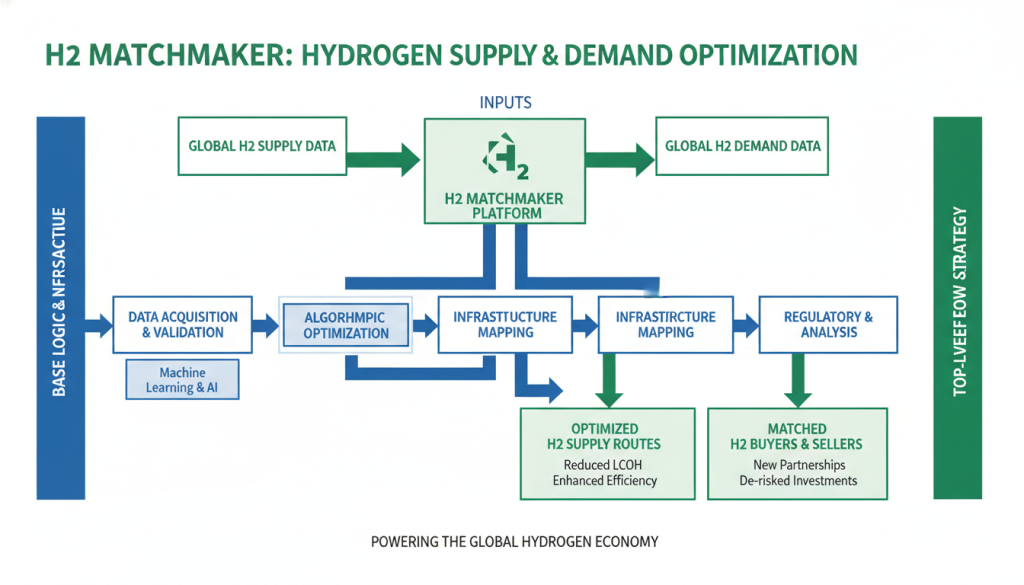
Pull your route data this morning. Identify your highest frequency A-to-B lane. List every other fleet operator running that same corridor. Call them. Create a consolidated volume demand and take that number to a developer. Stop looking for a station and start building a node. Join H2Matchmaker