Learn about the Penny Pledge - our $0.01/kg promise to fund the ‘That’s Clean’ campaign.

Hydrogen: Energy Source or Energy Carrier? The Physics Explained

Is Hydrogen a Fuel or a Battery?
One of the most common misconceptions in the green energy transition is categorizing hydrogen as a primary energy source. To understand the H2 economy, we must distinguish between sources and carriers.
Primary Sources vs. Energy Carriers
A primary energy source is a resource that exists naturally and can be harvested. Examples include:
- Solar: Photons from the sun.
- Wind: Kinetic energy from atmospheric pressure changes.
- Fossil Fuels: Ancient solar energy stored in carbon bonds.
Hydrogen, however, does not exist in free form on Earth. It is always bonded to other elements (like Oxygen in water or Carbon in methane). Therefore, we must expend energy to liberate it. This makes hydrogen an energy carrier (or vector).
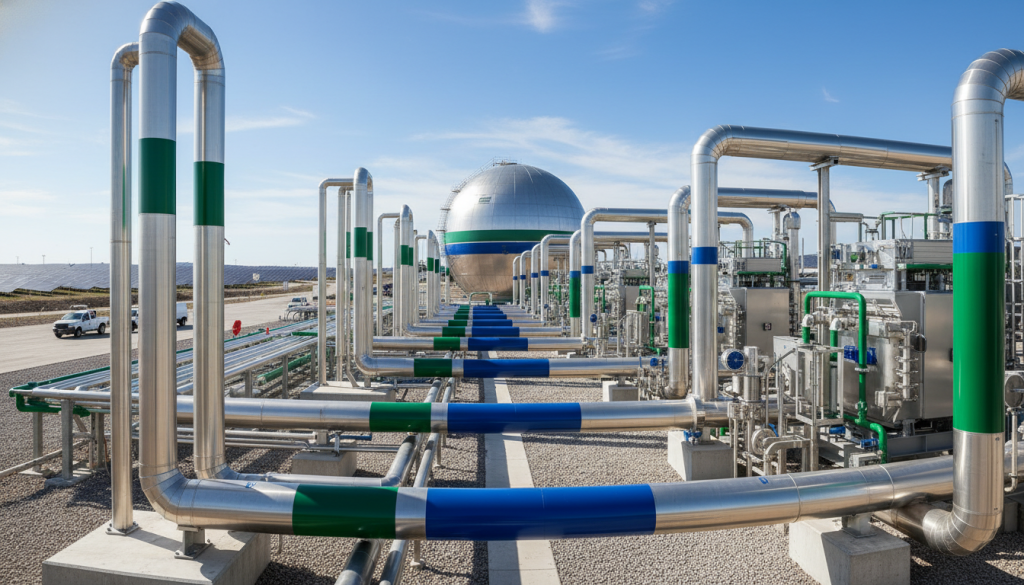
The Battery Analogy
Think of hydrogen essentially as a chemical battery. The process mirrors the charging and discharging of a lithium-ion cell:
The Thermodynamic Cycle:
Input Electricity (Source) → Electrolysis (Charging) → Hydrogen (Storage) → Fuel Cell (Discharging) → Motion
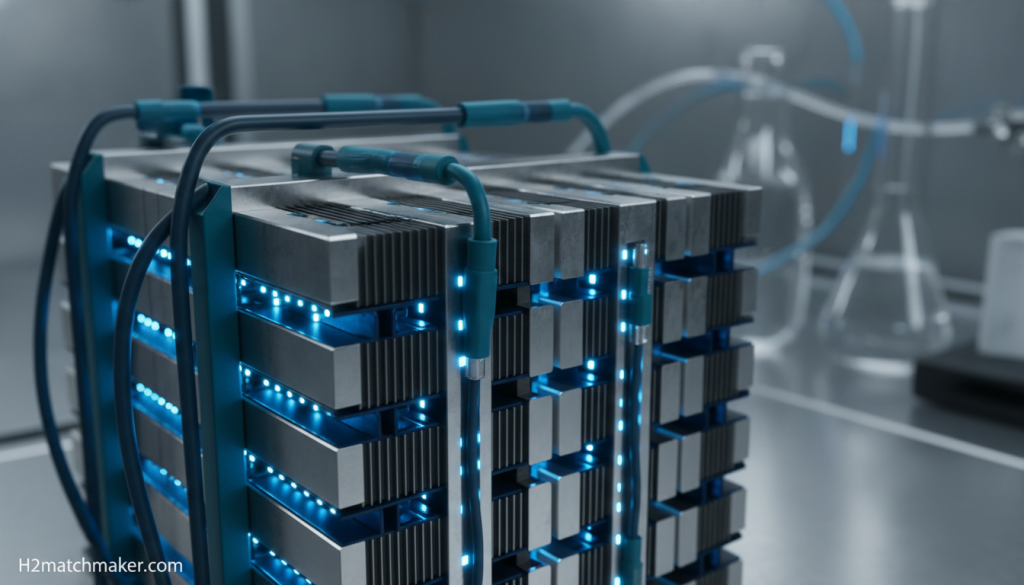
If it’s less efficient than a battery, why use it?
While batteries have higher round-trip efficiency (~90%) compared to hydrogen (~50%), hydrogen excels in energy density and logistics:
- Scale: Storing GWh of energy in batteries is prohibitively expensive; storing it as hydrogen in tanks or salt caverns is cost-effective.
- Weight: For heavy-duty transport (ships, aviation), the weight of batteries required for long range is physically impossible. Hydrogen offers a lightweight, high-energy alternative.