Learn about the Penny Pledge - our $0.01/kg promise to fund the ‘That’s Clean’ campaign.

US Hydrogen Policy 2026: The “Steel in the Ground” Mandate & Blue H2 Resurgence

The Free Ride Is Over
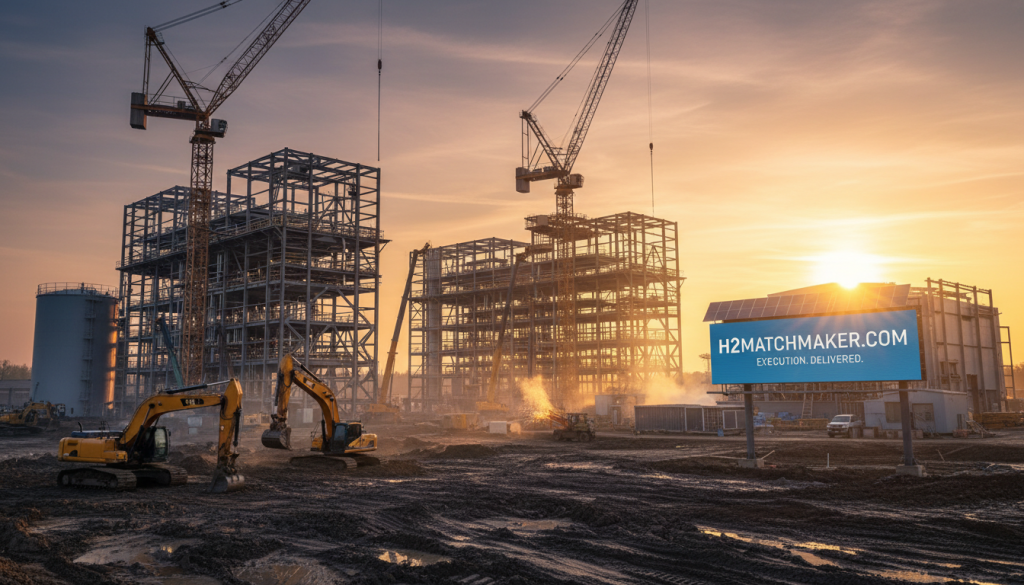
The U.S. hydrogen market is entering a different phase.
One year into the current administration, the tone has shifted from long-range ambition to near-term execution. Targets still matter, but they no longer substitute for projects that can actually be built, permitted, and financed.
For most of the early 2020s, hydrogen development was driven by projections. Gigawatts on slides. Cost curves pointing toward 2030. Concepts designed to mature later. That posture is becoming harder to defend as we move through 2026.
The incentives remain. The scrutiny has increased.
Ambition Is Not Gone. It Just Isn’t Enough Anymore.
Federal support for hydrogen has not disappeared. The 45V production tax credit remains law. But the environment around it has changed in ways that materially affect project viability.
Across agencies, lenders, and counterparties, the signal is consistent: projects that demonstrate real progress now are advantaged. Projects that rely on extended optionality are not.
At H2MatchMaker, we see this shift daily in how developers, investors, and offtakers are recalibrating their approach. Capital is still available. But it is flowing toward projects that can prove readiness, not just potential.
What follows is an execution-focused snapshot of how the U.S. hydrogen market is being evaluated in 2026.
The 45V Reality Check. Timing Matters More Than Before.
One of the biggest adjustments developers are facing is schedule discipline.
Early interpretations of the Inflation Reduction Act left room for long development runways. In practice, current IRS guidance, Treasury interpretation, and market behavior are converging around a tighter expectation: projects need to demonstrate meaningful construction progress earlier than many originally planned.
“Commence Construction” Is No Longer Abstract
Projects seeking to maximize access to 45V benefits are increasingly being evaluated against whether they can credibly meet IRS “commence construction” standards within the next few years.
In practical terms, that means one of two things:
• Beginning physical work of a significant nature, or
• Meeting the safe harbor threshold by incurring a meaningful portion of total project cost
Market participants are increasingly anchoring this around a 2028 timeframe, not because of a single statute, but because of how financing, permitting, and tax equity underwriting are aligning.
The result is a split market.
Who Is Advantaged
Projects that already have:
• Site control
• Permitting pathways defined
• Interconnection strategy resolved
• FEED or late-stage engineering completed
These projects can move. They can document progress. They can survive diligence.
Who Is Struggling
Projects that were designed to wait for:
• Major electrolyzer cost compression
• Large-scale grid upgrades later in the decade
• Policy clarification before committing capital
Those projects are not necessarily dead. But many no longer pencil under the most favorable assumptions that were common just a few years ago.
The lesson is simple. Optionality has a cost now.
The “Color War” Is Cooling. Economics Is Driving Again.
The earlier part of the decade was dominated by a simplified debate: green versus blue. That framing is losing relevance in day-to-day project decisions.
What matters more in 2026 is whether a project can meet carbon intensity thresholds, secure supply, and operate reliably at a price customers will actually sign for.

Why Blue Hydrogen Is Re-Entering More Conversations
This is not ideological. It is structural.
• Speed
Projects leveraging existing natural gas infrastructure and proven SMR or ATR systems can reach operation faster than many renewable-only pathways that remain constrained by interconnection queues.
• Cost
Unsubsidized green hydrogen costs still vary widely by region and power source. In many markets, costs remain well above what industrial offtakers can absorb without long-term credit support. Blue hydrogen pathways, when paired with high-capture CCS, often land lower on a delivered cost basis today.
• Reliability
Many industrial users require continuous supply. Blue hydrogen can meet baseload demand without the added system complexity required to firm intermittent renewable production.
None of this eliminates green hydrogen. It simply means projects are being evaluated on performance, not labels.
If a pathway meets carbon intensity requirements, clears permitting, and closes offtake, it advances. If it does not, it stalls.
From Slide Decks to Unit Economics
Capital markets have matured alongside policy.
In 2024, a strong narrative could carry a raise. In 2026, that same narrative must be backed by execution details.
Investors are less focused on whether hydrogen will work in theory. They are focused on whether this project will work in practice.
Three questions dominate diligence:
• Is there contracted offtake with credible counterparties?
• Is the EPC path realistic and committed?
• Can construction begin within the window the incentives assume?
This environment favors experienced operators and well-capitalized platforms. It also explains the growing consolidation across the sector. Smaller technology providers are increasingly partnering with, or being absorbed by, firms that can actually deploy steel, concrete, and crews.
Why Partner Selection Is Now a Constraint
Compressed timelines leave little room for trial and error.
Six months spent negotiating with a partner who cannot deliver on schedule is often the difference between qualifying for incentives and missing them.
That is why matchmaking is no longer a convenience. It is infrastructure.
At H2MatchMaker, we have re-oriented the platform around execution-era needs:
• Identifying capital aligned with near-term deployment
• Surfacing technology suppliers with real delivery slots
• Connecting offtakers willing to contract on today’s economics, not future hopes
Speed matters, but only when it is paired with credibility.

Common Questions We Hear
Is 45V effectively gone for green hydrogen?
No. The credit remains available. But green projects must resolve power sourcing, interconnection, and delivery now. Waiting for grid upgrades later in the decade is increasingly difficult to underwrite.
What does “steel in the ground” actually mean?
It is shorthand. In practice, projects must meet IRS “commence construction” standards through physical work or safe harbor expenditures. Clearing land alone does not qualify.
Is the government favoring blue hydrogen?
Policy language is increasingly source-agnostic and outcome-focused. Projects that meet emissions thresholds, deliver energy security, and create domestic economic activity are advantaged, regardless of pathway.
Conclusion. This Is the Execution Phase.
The hydrogen sector has not collapsed. It has matured.
The speculative layer is thinning. What remains is more industrial, more disciplined, and more serious. The incentives are real. The capital is real. But so is the clock.
Projects that make economic sense today can still move. Projects that require everything to improve later will struggle.
The market is no longer asking what could happen by 2030.
It is asking what can be built next.
If you are ready to move, the window is still open. Visit H2MatchMaker.com today to connect with the partners who can help you put steel in the ground before the window closes.